
In the quiet hum of a bustling kitchen, rice often finds itself relegated to the back of the fridge, tucked away as a forgotten leftover. Yet, within these humble grains lies a world of warmth and nourishment waiting to be awakened. Enter congee-a silky, comforting porridge that transforms yesterday’s rice into today’s soulful meal. This age-old dish transcends cultures and seasons, turning simplicity into solace with each simmering pot. join us as we explore the magic of turning leftover rice into congee, a timeless comfort food that breathes new life into what once seemed ordinary.
Turning yesterday’s rice into today’s comfort food is one of life’s simplest pleasures. leftover rice transforms beautifully into a warm, soothing bowl of congee, a time-honored dish prized across Asia for it’s creamy texture and comforting flavors. This recipe embraces the magic of transforming rice into congee, coaxing the perfect balance of silkiness and body while highlighting savory and sweet accents that elevate every spoonful.
Prep and Cook Time
- Readiness: 10 minutes
- Cooking: 40 minutes
- Total Time: 50 minutes
Yield
- Serves 4 generous bowls
Difficulty Level
- Easy – perfect for busy weeknights or lazy weekends
ingredients
- 2 cups leftover cooked rice (preferably jasmine or long grain)
- 6 cups chicken or vegetable broth (low sodium)
- 1-inch piece fresh ginger, thinly sliced
- 2 cloves garlic, minced
- 1 tablespoon neutral oil (canola or vegetable)
- 1 teaspoon salt, adjust to taste
- ½ teaspoon white pepper or freshly ground black pepper
- 2 green onions, thinly sliced (white and green parts separated)
- Optional savory additions: shredded chicken, sautéed mushrooms, or century egg
- Optional sweet add-ons: diced sweet potato, goji berries, or a drizzle of honey
- Garnishes: toasted sesame oil, fried shallots, fresh cilantro, soy sauce, or chili oil
Instructions
- in a large pot, heat the neutral oil over medium heat. Add the ginger slices and garlic, sautéing until fragrant and just golden, about 2-3 minutes. This aromatics base infuses deep warmth into the dish.
- Add leftover rice to the pot, break up any clumps gently with the back of a spoon. Stir continuously to coat the rice lightly with the aromatics.
- Pour in the chicken or vegetable broth and bring to a boil. Once boiling, reduce heat to a simmer.
- Allow the mixture to gently simmer, uncovered, stirring occasionally to prevent sticking. This slow cooking will soften the rice further, releasing starches to create that signature creamy texture. Simmer for about 30-35 minutes or until desired consistency is achieved.
- Season with salt and pepper. Stir in the white parts of green onions for subtle pungency.
- If using, fold in any savory additions like shredded chicken or mushrooms about 5 minutes before finishing cooking to warm thru without losing their texture.
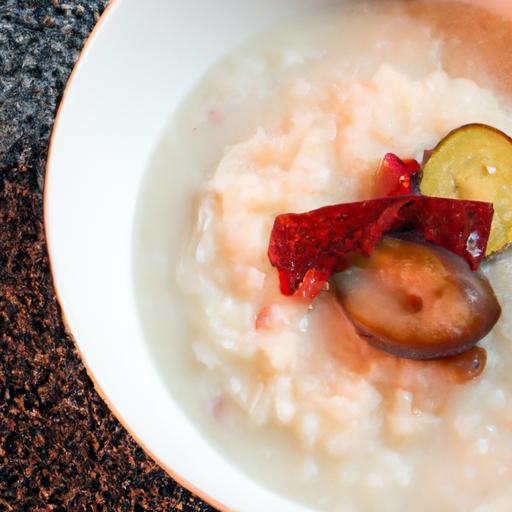
- For a natural hint of sweetness, stir in optional ingredients such as diced sweet potatoes or goji berries during the last 10 minutes of cooking.
- Once ready, ladle hot congee into bowls.
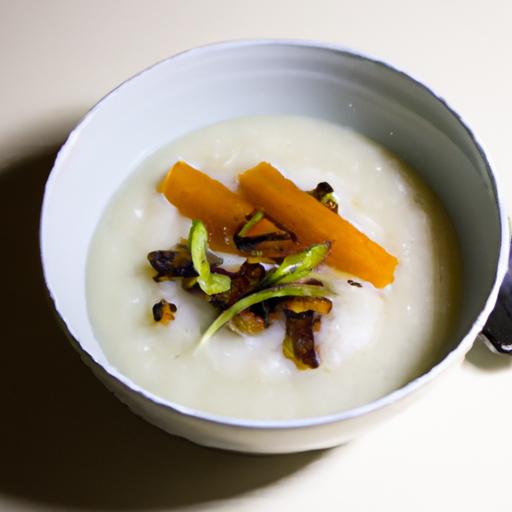
- Garnish generously with green onions, a drizzle of toasted sesame oil, crunchy fried shallots, fresh cilantro, and soy or chili oil to taste.
Tips for Success
- rice consistency: use day-old rice rather than freshly cooked as it provides the ideal texture and starch content for creaminess.
- Protein variations: Swap shredded chicken for thinly sliced fish, tofu cubes, or even ground pork for richness and variety.
- Broth depth: for a more intense flavor, simmer homemade broth with bones or veggie scraps beforehand; store-bought broth works well for ease and convenience.
- Stir frequently enough: Stir gently but regularly-this prevents sticking and encourages the rice to break down evenly, yielding a silky porridge.
- Make ahead: Congee tastes even better the next day; reheat gently adding a splash of water or broth to restore creamy consistency.
Serving Suggestions
Congee is incredibly versatile and inviting when served with thoughtfully curated accompaniments. Embrace its comforting simplicity by presenting with:
- Soy sauce and chili oil in small side bowls for individual seasoning control
- Crunchy fried shallots or garlic chips for contrast in texture
- Pickled vegetables such as mustard greens or radish to add shining acidity
- Fresh herbs like thai basil or cilantro, which enliven each mouthful
- A soft-boiled egg or crispy fried egg for luxurious richness
For a delightful visual presentation, place congee in rustic ceramic bowls, swirling the garnishes to create colorful, inviting highlights. This alchemy of leftover rice and fresh flavors turns humble ingredients into a soul-satisfying masterpiece.

| Nutrient | Per Serving |
|---|---|
| Calories | 180 kcal |
| Protein | 8 g |
| Carbohydrates | 30 g |
| Fat | 3 g |
For more inspiration on creative rice dishes, check out our guide on Creative Rice Recipes to Elevate Everyday Meals. For nutritional advice on rice and grains, explore resources from the Academy of Nutrition and Dietetics.
Q&A
Q&A: From Leftovers to Comfort – Transforming Rice into Congee
Q1: what inspired the idea of turning leftover rice into congee?
A1: The magic of congee lies in its ability to transform humble, leftover rice into a comforting, creamy bowl of goodness. It’s a party of resourcefulness and tradition-a way to reduce waste and craft something nourishing from what might otherwise be forgotten. Essentially, it’s alchemy in the kitchen: turning yesterday’s staples into today’s comfort food.
Q2: How does leftover rice differ from fresh rice when making congee?
A2: Leftover rice has already been cooked and cooled, which changes its texture and starch structure. When simmered slowly in water or broth, these starches break down gradually, yielding a naturally thick, velvety congee without the need to start from scratch. Fresh rice can work too, but leftover grains melt into the porridge with a unique creaminess that only time on the shelf can imbue.
Q3: What’s the basic method for turning leftover rice into congee?
A3: Start by placing your leftover rice in a pot with a generous amount of water or broth-ratio frequently enough starts at about four parts liquid to one part rice. Slowly simmer, stirring often, until the grains break down and the mixture thickens into a smooth, soupy consistency. From there, it’s all about personalization-adding aromatics, proteins, vegetables, or spices to create your ideal bowl.
Q4: Can you suggest some creative flavor combinations to jazz up leftover rice congee?
A4: Definitely! Try ginger and scallions for a classic Asian twist; coconut milk and turmeric for a creamy, golden flair; or roasted garlic with sautéed mushrooms for a rich umami punch. Add shredded chicken, poached egg, or crispy fried shallots for texture and depth. The beauty of congee is its blank canvas nature-it welcomes experimentation.
Q5: why is congee considered comfort food in so many cultures?
A5: Across Asia and beyond, congee is more than just food-it’s a ritual of care and healing. Its warmth and gentle texture soothe the body, making it a go-to for mornings, sick days, or quiet moments. Because it’s easy to digest and endlessly adaptable, congee carries a universal language of comfort that transcends borders.
Q6: Any tips for storing and reheating leftover rice congee?
A6: Store congee in an airtight container in the fridge for up to 3 days. When reheating, add a splash of water or broth to loosen the texture-you want it creamy, never dry or gummy. Warm gently over low heat, stirring often, to revive that comforting softness with every spoonful.
Q7: How does transforming leftover rice into congee contribute to sustainability?
A7: Repurposing leftover rice reduces food waste, a huge environmental win. Instead of tossing extra grains, you’re creating a delicious new meal with minimal additional ingredients or energy. It’s a small step that honors both the food on your plate and the planet we share.
Whether you see it as humble peasant food or a luxurious comfort bowl, turning leftover rice into congee is an art of transformation-melding sustainability, tradition, and flavor into a warm hug from your kitchen to your soul.
Insights and Conclusions
In the humble grains of leftover rice lies a world of warmth and nourishment waiting to be rediscovered. Transforming these simple staples into a soothing bowl of congee not only honors the art of mindful cooking but also breathes new life into what might or else be forgotten. Whether as a comforting start to the day or a gentle embrace on a tired evening, congee proves that with a touch of creativity and care, everyday ingredients can become extraordinary expressions of comfort and sustenance. So next time you find a bowl of rice lingering on the countertop, remember: a deliciously restorative congee is just a simmer away.